

As I develop Hen's Tooth shop, to celebrate slow living and conscious choices, I’ve been diving deeper into books that align with that ethos. One gem I discovered is The Joyful Environmentalist by Isabel Losada—a refreshing take on activism that’s as uplifting as it is empowering.
The Joyful Environmentalist by Isabel Losada
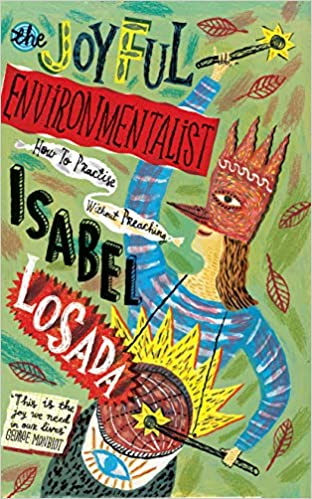
A Book Review
Written from the point of view of an average middle-class, city-based, white woman who is concerned about the environment, this book is refreshing and practical.
I can relate. She could be any one of my friends, in another life she could be me.
This isn’t your typical doom-and-gloom environmental read. Losada brings warmth, wit, and a sense of hope to the climate conversation. Her approach is practical, personal, and peppered with humor, making it feel like you’re chatting with a wise, funny friend who’s gently nudging you toward better choices.
She doesn’t preach. Instead, she invites. From switching to ethical banking to embracing second-hand fashion, Losada shows how small, joyful actions can ripple outward. It’s activism for real people—busy, imperfect, curious people who want to do better without burning out.
In the face of the overwhelming challenges of climate change and environmental degradation, it’s easy to feel disempowered and hopeless. But reading this can make even the most hardened cynics feel a little bit activist!
There is so much progress to be made, so much that needs to change, and we as individuals can only do so much.
This book gives the reader an honest, thought-provoking, often amusing, and achievable perspective. Packed with ideas and stories about one woman’s adventures in trying to lead a more sustainable life, it’s an enjoyable read.
Other books on my stack have been on self-sufficiency, ecology and biographies, and manifestos by notable public figures. This book complements that library.
It’s a reminder that being “a little bit activist” is not only okay—it’s powerful.
What’s Different About This Book?
I like the conversational style and each chapter reads like a series of blogs – which in itself has inspired me to think about my next book project.
The title of one of the chapters inspired the title for this article – ‘Being A Little Bit activist’.
Each chapter is a small story of Isabel’s environmental adventures in her day-to-day life.
From taking a volunteering holiday to plant trees in Scotland, to banging a drum at an Extinction Rebellion rally.
In other chapters, she interviews prominent people in the green economy; businesses making a real difference, such as the CEOs of Good Energy and Riverford Organic.
With a little consumer research, I am sure there would be similar local veg box schemes across most of the country. Without wishing to take anything away from pioneers like Riverford, we can all look in our local areas to find and support community veg box schemes, independent greengrocers or city farms, etc. I love the work Riverford do, but look for your local equivalent.

Individual vs Strategic Level Action
In one chapter, Isabel visits a rewilding project on an ancestral estate The Knepp Estate. It is a fine example of someone with land and resources using it strategically, ethically, and in an ecologically sound way. Literally rebuilding, rethinking, and growing their business model in a radical way.
I wouldn’t resent most of the UK’s land being owned by a handful of landed gentry and billionaires if they all did something like this!
In another chapter, she gets into an all too familiar argument in a coffee shop about disposable cutlery. It’s one of those arguments many of us have probably had in our heads and never said out loud. (I know I have had this argument in my head then smiled politely and walked away!). She describes these experiences with a wry and entertaining voice. It’s refreshing, accessible, and relatable for anyone living a typical British life, trying to muddle along and make a difference.
The argument with the shop ends in it being down to individuals being responsible for carrying reusable cutlery around. In a way that makes sense, but again, it absolves retailers from the ultimate responsibility to make a difference at a strategic level. Instead of passing the buck to their customers!
Are we all expected to carry a backpack around with us full of reusable plates, reusable wipes, cutlery, coffee cup, thermos flask, refillable water bottle, and reusable bags whenever we leave the house? We’re popping out for lunch not scaling Everest!
It’s Not Easy Being Green
Things like this enrage me. You do everything reasonably practicable to be more responsible and sustainable, yet retailers won’t pull their weight.
Much of this book is based on the individual actions we can take. However, it does show an alternative perspective on the multidimensional challenges we all face and compromises we make, such as:
- A rewilding a space that still culls animals for food.
- Choosing some fabrics over others based on environmental and climate justice rather than just carbon emissions.
- Energy-saving assessments ignoring emissions in favour of efficiency.
The chapter on how to remove plastic from your home is really helpful. It made me realise how much I have done already, but also what more I can do.
Living with intention and making ethical choices can be conscious and chic.
With a little help from books such as this, we can all make more informed choices and decisions.
It’s a little bit political – but everything seems to be these days – you must choose sides if you want to be a little bit activist!
I’ll be looking for the books listed in the further reading to add to my library.

What are you willing and able to do (and not do) to preserve biodiversity, cut emissions, and generally live healthier, abundant lives without sacrificing the natural environment?
It’s a question to ask of ourselves. But to also ask retailers, small and large businesses, service providers, policymakers, and governments.
This is a collective responsibility. It can’t be left to individual action, but individuals do need to take action and keep the pressure on.
Becoming An Activist
I love the idea of being a little bit activist.
We can all quietly be activists without breaking the law, alienating people, and browbeating them into ‘going green’.
Reading books such as this keeps these issues front and centre in my mind. I’ve found myself being all the more conscious of the willful ignorance around me. Of the lack of responsibility taken by the big retailers who pass their waste onto consumers. Passing the buck and refusing to change because all they care about are the short-term gains for their shareholders.
What Can You Do To Be A Little Bit Activist?
- Vote with your money. Buy ethically, locally, and sustainably
- Write. To MPs, retailers, fill in petitions and call out environmental destruction when you see it. Get involved in the conversation (or start one).
- Pick up litter. I assume if you have read this far you are not an asshole that drops litter or fly tips!
- At the ballot box. Perhaps if fewer of us vote tactically and vote Green instead there would be better representation in parliament?
- Vote with your feet. Walk, cycle, take the bus or the train but avoid using your car where you can. It’s free exercise and it’s less pollution – win-win
-
Reduce wastage. Whether that’s plastic, energy, water, food, or other waste. Think twice before you buy something and think again when disposing of it.
Keep stylish and practical shopping bags by the front door so you always remember to take them with you, instead of having to balance your shopping in your arms, or succumb to having to get plastic bag.